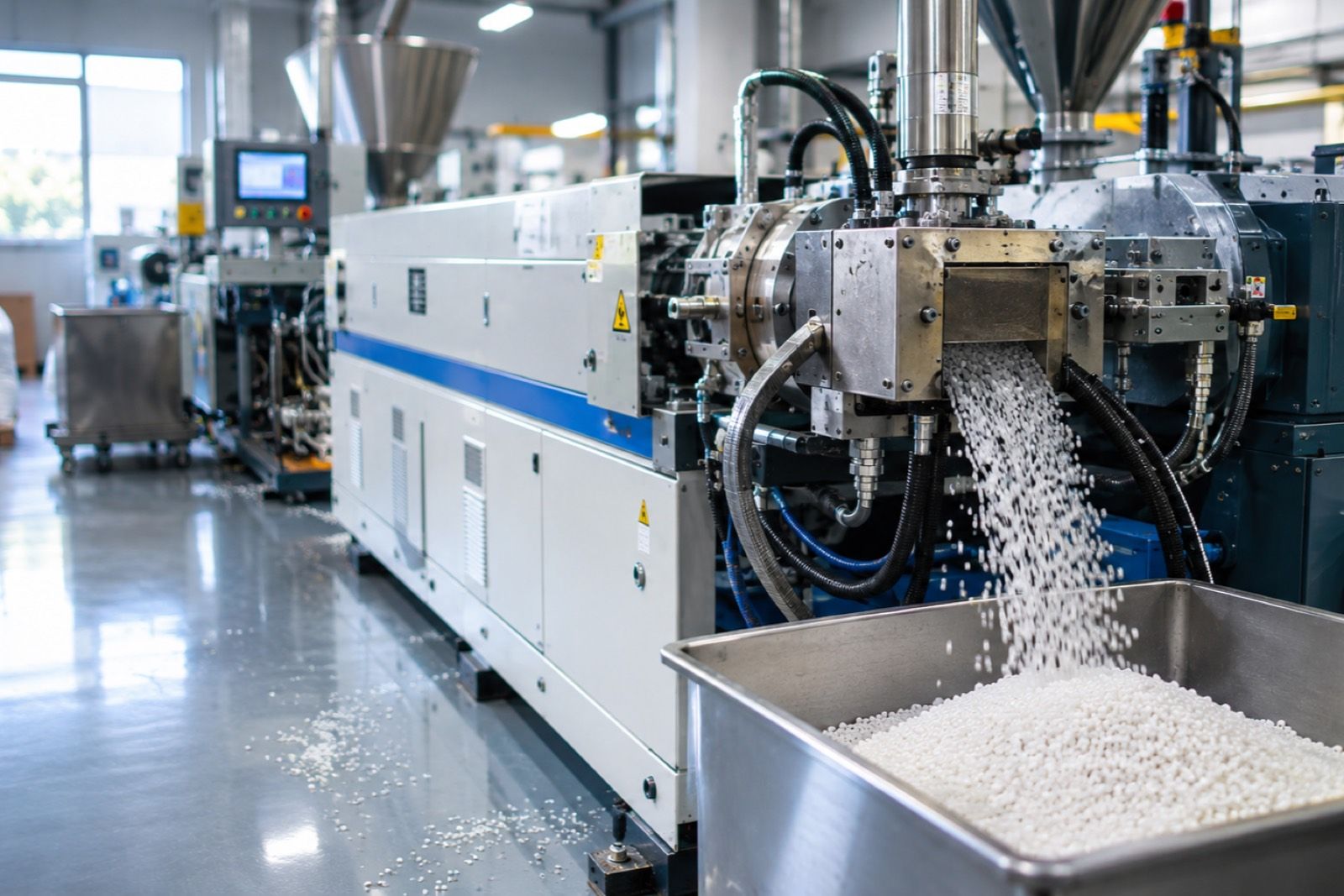
For antiblock, functional and film-additive masterbatch plants and modified-plastics compounders. Granular and low-iron high-purity silica routes that address feeding, dispersion, loading, screen-pack pressure and downstream film stability in PE, PP and PET masterbatch.
Grades our customers usually benchmark against: W. R. Grace SYLOBLOC® antiblock grades, Evonik SPHERILEX® and SIPERNAT® plastics silicas, and PQ / QEMETICA plastics antiblock and functional filler grades.
Our route is not a brand-premium play: we start where the production problem is, run profile-matched screening, and earn the slot as a qualified second source — one validated sample at a time.
Three grades are put forward for this track. We do not publish typical-value tables here: the controlled TDS, COA and SDS for each grade are sent with the sample so that your evaluation runs on the document that will govern supply, not on brochure figures.
| Grade | Material | Where it sits in the screening |
|---|---|---|
| CENSIL 165GR | Granular precipitated silica | Granular, for masterbatch production where feeding stability and dust control drive the choice more than fineness. |
| CENSIL 185GR | Granular precipitated silica | Granular grade at a higher surface-area position, for masterbatch work that needs more functional loading from the same feeding behaviour. |
| CENSIL 779 | Low-iron, high-purity precipitated silica | Same low-iron platform, aimed at tighter downstream appearance — and the powder route for masterbatch plants whose customers judge the film by eye. |
On data. Final performance, compliance and application fit follow the supplier's latest TDS, the lot COA and your own test results. Ask for the grade-specific document set before you commit a formulation or a trial protocol.
| Validation dimension | Signal to check | What it tells you |
|---|---|---|
| Feeding and dust | Feed stability and dust control | Plant operability |
| Masterbatch dispersion | Agglomerates, specks or uneven dispersion | Downstream appearance |
| Screen-pack pressure | Melt filter pressure rise | Extrusion stability |
| Loading | Whether processing holds at the target loading | Commercial viability |
| Downstream film | Opening, haze, clarity, coefficient of friction | End-application value |
“CENSIL 165GR and 185GR go first for granular feeding and masterbatch dispersion; CENSIL 779 covers the supplementary check where low iron, high purity and downstream appearance matter. Resin, equipment, loading and target film performance are confirmed before anything ships.”